- Handel 'Solomon': A Momentous Success
-
Date Posted: Tue, 17 Mar 2026
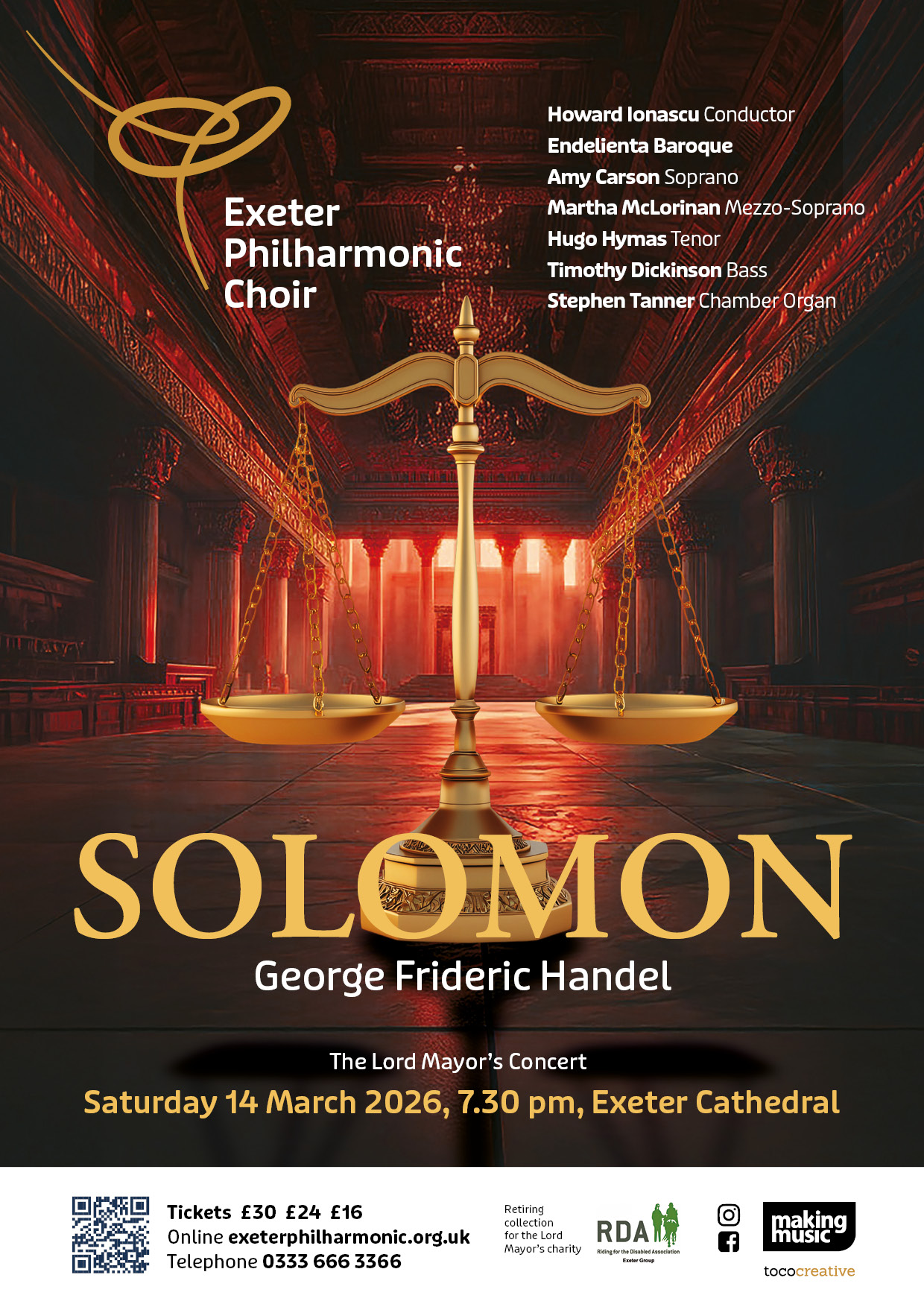 After its first performances in 1749, Handel’s oratorio Solomon was overlooked for 200 years. Lacking the popularity of Messiah and requiring large forces may account for that, but Exeter Philharmonic Choir’s epic performance in Exeter Cathedral showed why it was worth the commitment to present this rich and exuberant monster of a piece.
This concert was thrilling. The attention to detail and authenticity of baroque musical conventions made it so. Endelienta Baroque, playing historic instruments, helped to shape it. Director of Music Howard Ionascu coaxed musical responses from everyone, particularly the large double choir, whose tenderness in the ‘Nightingale Chorus’ and warmongering cries in the Act III battle chorus, ‘Shake the Dome’, displayed an impressive range of emotion.
This oratorio was a departure for Handel, a drama in a set of three tableaux rather than a continuous story with plot development. King Solomon provides the thread and mezzo-soprano Martha McLorinan’s rich voice and excellent diction in that role were regally commanding and authoritative. In the enlightening pre-concert talk, she acknowledged that every other character gets the best tunes, but in the Act I aria, ’What though I trace each herb and flower’, she made the most of it, movingly plaintive and lyrical.
Solomon dispenses his legendary wisdom in Act II, and EPC boldly gave the roles of the two women seeking his judgment to singers from within their own ranks. Sopranos Charlotte Moyes and Helen Goode displayed their confidence in the most theatrical aria of the work – the trio, ‘Words are weak’. Their solo arias that followed were well characterised too, and Charlotte’s voice was perfect for the grief-stricken mother (‘Can I see my infant gored?’). Helen was suitably grovelling (‘Thy sentence, great King, is prudent and wise’) and her singing was musically impressive and strong.
Act III welcomed the Queen of Sheba, familiar music that drew our attention to the outstanding Endelienta ensemble, who contributed so much to the energy and richness of Handel’s score. Cellist Jacob Garside and organist Stephen Tanner accompanied the recitatives with supportive subtlety. Having arrived, the Queen graced us with more of her presence. Amy Carson energetically portrayed the excitement of being in Solomon’s court in an athletic aria, ‘Every sight these eyes behold’, and duet with Solomon, before the final triumphant chorus, ‘Praise the Lord’.
Bass Timothy Dickinson had only two arias, the most engaging as a Levite in Act II, ‘Thrice blest’, and I was thirsty for more. Tenor Hugo Hymas’ Zadok had a fruity, focused tone, and his coloratura lines were beautifully articulated. The aria ‘See the tall palm’ in Act II was virtuosic.
This project was a momentous success. It was clear that the performers were passionate about sharing their enthusiasm for the music, under Howard’s inspiring leadership. Congratulations to all.
Peter Hunt
- CONCERT FOR THE LORD MAYOR'S CHARITY
-
Date Posted: Sun, 22 Feb 2026
 We're delighted to share news about a special concert on Saturday 18 April, when the Lord Mayor of Exeter will be presenting an afternoon of song and poetry in support of her chosen charity, Riding for the Disabled - Exeter Group.
Set in Exeter's Historic Guildhall, the afternoon will begin with a mayoral reception, followed by music and verse performed by members of Exeter Philharmonic Choir.
There are over one hundred singers in EPC, and in 2021 a smaller chorus was formed to enable annual tours along ancient pilgrimage routes in different parts of England - the EPC Pilgrims' Chorus, which has since journeyed successfully through Cornwall, Devon, Herefordshire and Hampshire. The Chorus is honoured to perform for the Lord Mayor and her guests on this special occasion.
To suit the Guildhall’s historic setting, the Lord Mayor has chosen a programme for all tastes - a musical journey through 500 years of choral music, from sacred and secular works to spirituals and folk songs, woven together with poetry. The Pilgrims' Chorus performs under the expert leadership of its Musical Director, Stephen Tanner.
Tickets available from the Corn Exchange http://www.exetercornexchange.co.uk/.../exeter.../
- THE WEATHER BOOK - AN EXCITING EPC COMMISSION
-
Date Posted: Fri, 14 Nov 2025
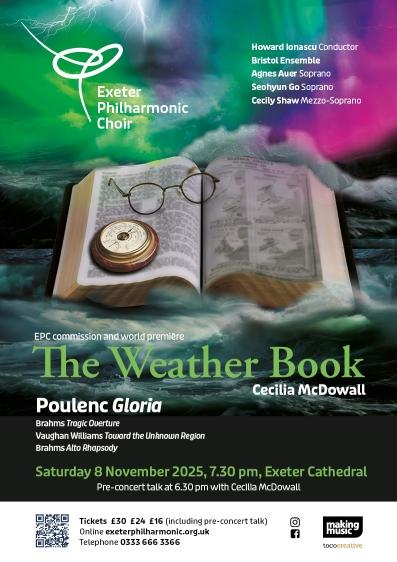 Exeter Philharmonic Choir's 2025/26 season opened on Saturday 8 November in Exeter Cathedral with a programme of choral music ranging from the late 19th century through to the present day, the latter being a new work by Cecilia McDowall. The EPC is to be congratulated on commissioning this popular and much-recorded composer to write a major piece for it, and the whole concert provided a richly enjoyable evening.
To start, Director of Music Howard Ionascu conducted the Bristol Ensemble in Brahms’ Tragic Overture. Although there was much fine playing from the instrumentalists (as throughout the concert), the wind and brass rather over-dominated the strings, reducing the contrasts and vitality of the music.
The choir’s first contribution to the evening was in Poulenc's Gloria, not an easy work to perform. This non-traditional setting of the text requires choir and orchestra to be on their toes given the wide dynamics and moods and alternating lyricism and dissonance. Most of the challenges were well met under Howard Ionascu’s lively direction. The work’s lyrical moments are led by a soprano soloist and Seohyun Go sang with a sure sense of serenity and beauty.
And now to the new work that ended the first part of the concert. Cecilia McDowall writes music that is both enjoyable to perform and accessible to listen to and The Weather Book is no different. This is not the first time that she has composed choral works with the environment as their theme, including The Shipping Forecast, 70 Degrees Below Zero and The Ice is Listening. To a text by Kate Wakeling, The Weather Book marks the contribution to our understanding of climate and meteorology by three scientists: Celsius, Eunice Newton Foote (shamefully ignored in 19th-century American scientific circles) and Robert FitzRoy. Intriguingly, the score includes explicit references to ‘atmospheric’, ‘boiling point’, ‘airy’ and ‘temperate’ to set the appropriate mood for soprano soloist, choir and orchestra, while Wakeling's words draw directly on those of the three scientists.
The first (‘Celsius Rising’) and longest of the three movements sees the soprano soloist given prominence over a supportive chorus against the attractive orchestration to be found throughout the work. Soprano Agnes Auer sang with the confidence derived from already having given the first performance of this section of the work with Sweden's Gustaf Vasa Kammarkör (co-commissioners of the work). She was equally at home in the two concluding movements (‘History of Air’ and ‘Sublime Silence’) that were new to her. The choir showed obvious pleasure in the music written for it, especially the quirky setting of the words (much play on the word ‘barometer’) in the final movement (although words were at times hidden by the orchestra), while the second movement’s scoring seemed to have an oriental colour at times. This 20-minute work is a most attractive addition to the contemporary choral repertoire: an intriguing subject, a facility in the writing and a pleasure in performing. I hope that Cecilia McDowall will see The Weather Book taken up by other choirs both here and abroad.
The two works performed after the interval each took on the theme of an uncertain beginning to a spiritual journey, building towards a sense of resolution. The first saw a return to the music of Brahms, featuring the Alto Rhapsody for alto soloist and the lower voices of the choir, and drawing on Goethe’s Harzreise im Winter about a misanthropic wanderer. Cecily Shaw was the fine, rich-voiced soloist in music that moved from the dark, minor-key tone of the first two sections describing the subject's restless anguish to the major key of the transformatory third, where she was joined by the choir.
Using the poetry of Walt Whitman, Vaughan Williams’ Toward the Unknown Region for choir and orchestra was a suitably exuberant ending to the concert, where Howard Ionascu allowed the EPC to let go as the music moved towards its exultant finale. Yes, not all the words were clear against the rich orchestral tapestry, but the resulting explosion of sound as the work drew to a close was thrilling!
David Batty
- ‘A WONDERFUL EVENING OF MUSIC-MAKING’
-
Date Posted: Mon, 16 Jun 2025
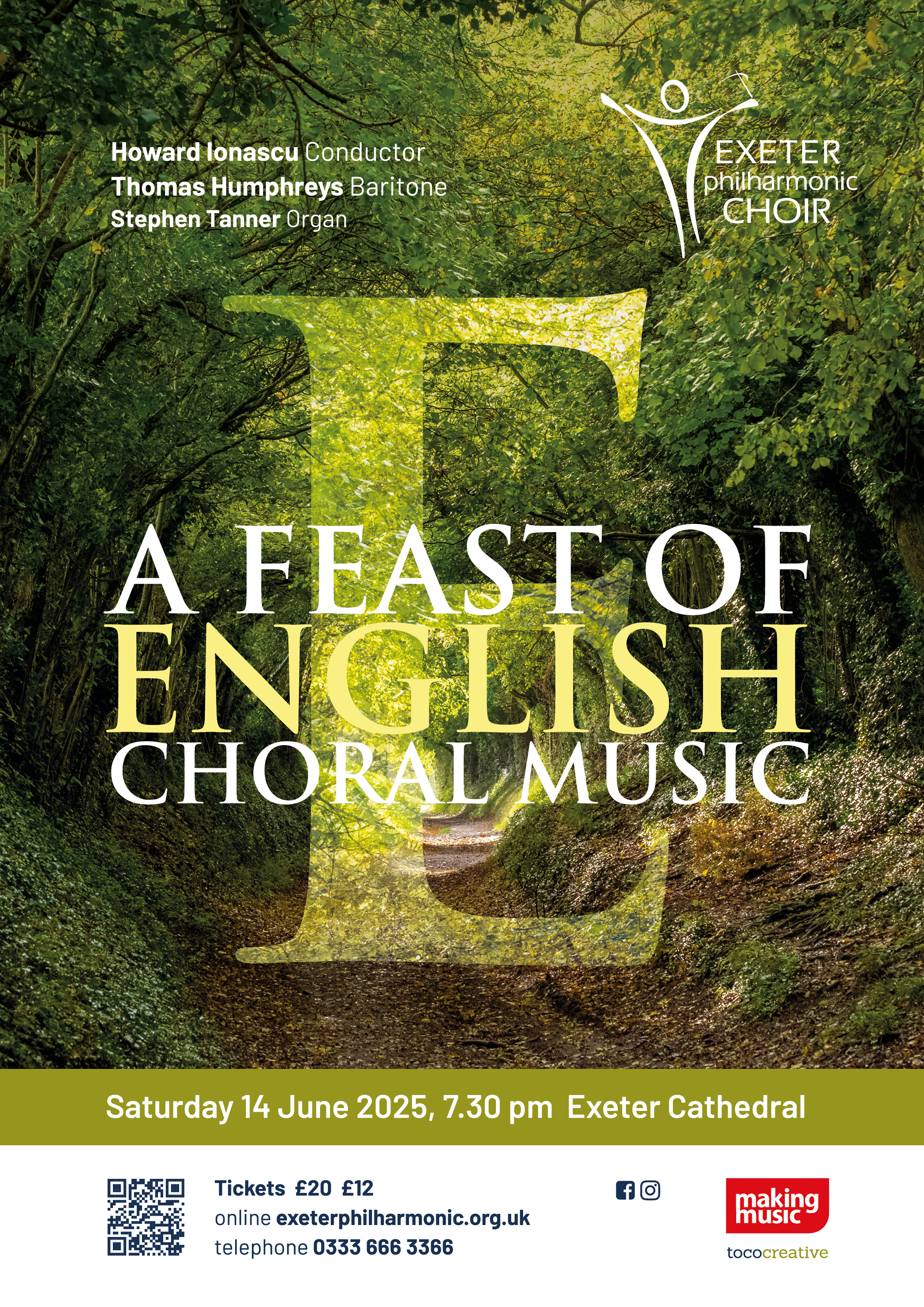
Saturday 14 June 2025
Exeter Cathedral
Howard Ionascu Conductor
Thomas Humphreys Baritone
Stephen Tanner Organ
‘From the beginning, the audience knew they were in for a wonderful evening of music-making,’ writes independent reviewer, Angela Blackwell.
For her the choir, under Howard Ionascu’s direction, performed Parry’s magnificent I was Glad with ‘a rich tone and perfectly balanced sound’, while the contrasting performance of Crossing the Bar, sung a capella and from memory, ‘heightened the level of communication with the audience’.
The highlight of the concert for our reviewer was Vaughan Williams’ Five Mystical Songs, where the choir was joined by baritone Thomas Humphreys. She says: ‘His beautiful tone, warmth and sincerity were matched by the sensitive organ accompaniment of Stephen Tanner, who produced a fine array of colours from the organ that never over-powered.’ She also praises ‘the full power and sensitivity of the choir’.
After the interval, Sullivan’s popular The Lost Chord gave another chance to enjoy Thomas Humphreys’ lyrical voice, and our reviewer found it ‘a real treat to hear the organ being expertly showcased by Stephen Tanner’ in the music of Bairstow and Howells.
She adds that the choir excelled in the challenges of the final two works, with ‘beautiful unison singing’ at the opening of Elgar’s The Spirit of the Lord and in the complex contrapuntal entries of Parry’s Blest Pair of Sirens and its glorious, uplifting finale.
For Angela Blackwell, the words of the poet Milton in the closing work summed up the evening perfectly. It was a concert featuring the ‘sphere-born harmonious sisters, voice and verse’ and a choir, soloist and organist who ‘wed their divine sounds’, leaving the audience to depart with smiles on their faces.
Angela Blackwell’s full review can be found here.
- 'Bold, vital and joyful': an evening of music by Mozart
-
Date Posted: Sat, 22 Mar 2025
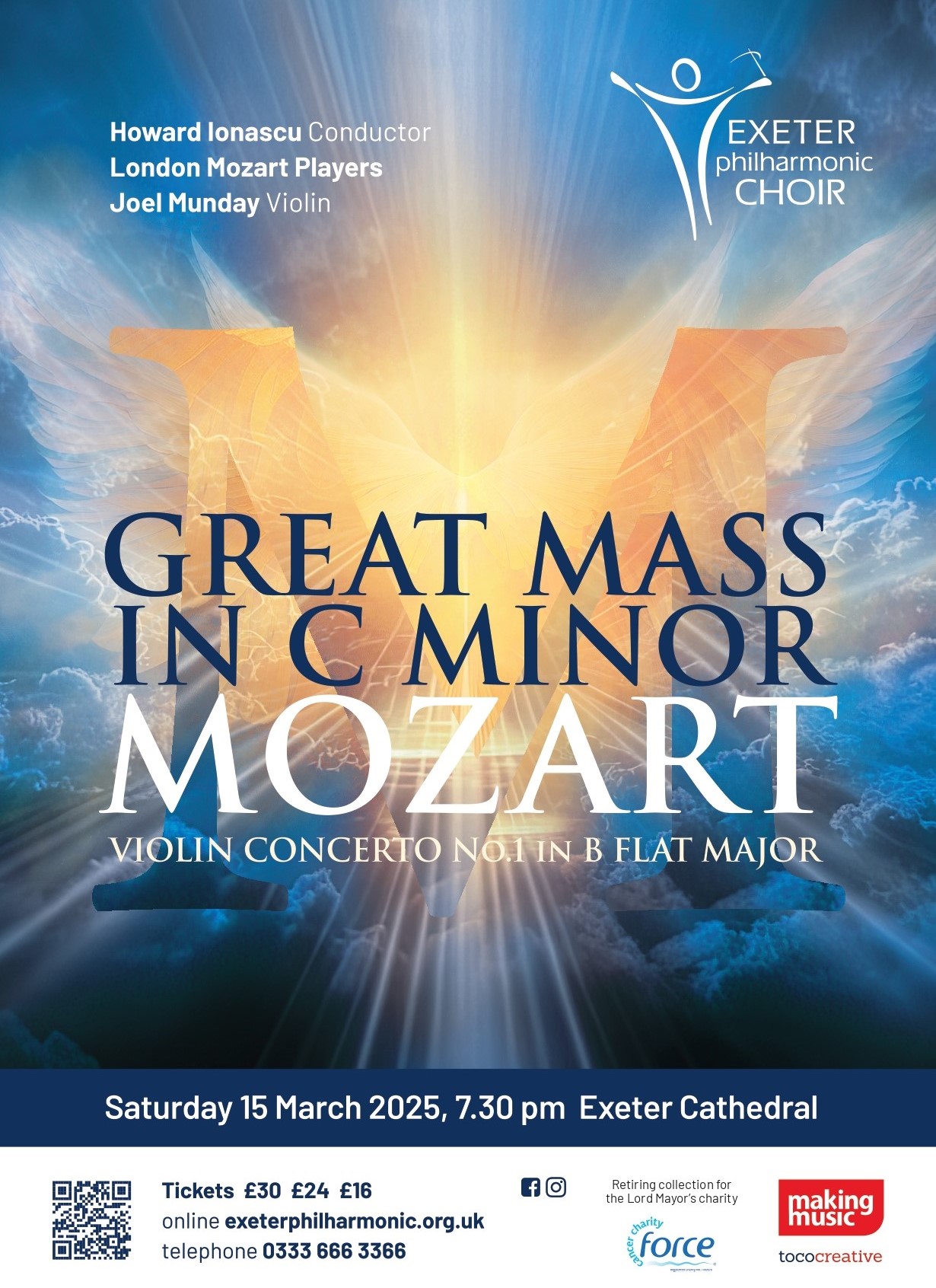 'Bold, vital and joyful': an evening of music by Mozart
Regina Caeli
Violin Concerto No. 1 in B flat major
Laudate Dominum
Great Mass in C minor
Exeter Cathedral, Saturday 15 March 2025
In the words of independent reviewer David Batty, Exeter Philharmonic Choir’s all-Mozart Spring concert in a packed Exeter Cathedral was 'bold, vital and joyful'.
London Mozart Players, renowned soloists and choir delivered a 'spirited and enjoyable' start to the evening with Regina Caeli. This sense of spirited enjoyment then spilled over to Joel Munday’s superb performance of Mozart’s 1st Violin Concerto, played with 'a beautiful line and sensitivity to the dialogue between soloist and orchestra'. The first half ended with Laudate Dominum, featuring Lucinda Cox as soloist.
Mozart's Great Mass in C minor comprised the second half of the concert. Like his Requiem, it sadly remained unfinished. The Mass was written for his beloved wife Constanze, one of the soloists at its 1783 première, and the solo work falls principally to two sopranos. Soloists Daisy Walford and Lucinda Cox were 'a joy to hear, virtuosic and agile'. Tenor Ruairi Bowen joined them to good effect in the Quoniam, but bass Tim Mirfin had to wait until the concluding Benedictus before joining his three colleagues to provide a fine platform for the concluding choral Hosanna.
For reviewer David Batty, 'the monumental pomp and solemnity of the choral sections were well met by Exeter Philharmonic Choir, bold where necessary but aware also of the variations in dynamics demanded by conductor Howard Ionascu. Mozart’s double choruses were sung with seeming ease, the Cum Sancto Spiritu fugue was appropriately vital, the Credo was delivered with real belief and the closing Hosannas in the Sanctus and Benedictus were alive and joyful. Throughout, the choir had the luxury of being accompanied by the London Mozart Players, beautifully balanced both internally and with the singers.'
‘With soloists, choir and orchestra authoritatively led by Howard Ionascu, the EPC continues to be in good shape!’
David Batty’s full review can be found here: here
- Sir Neville Marriner – the choir's first Honorary President
-
Date Posted: Fri, 26 Apr 2024
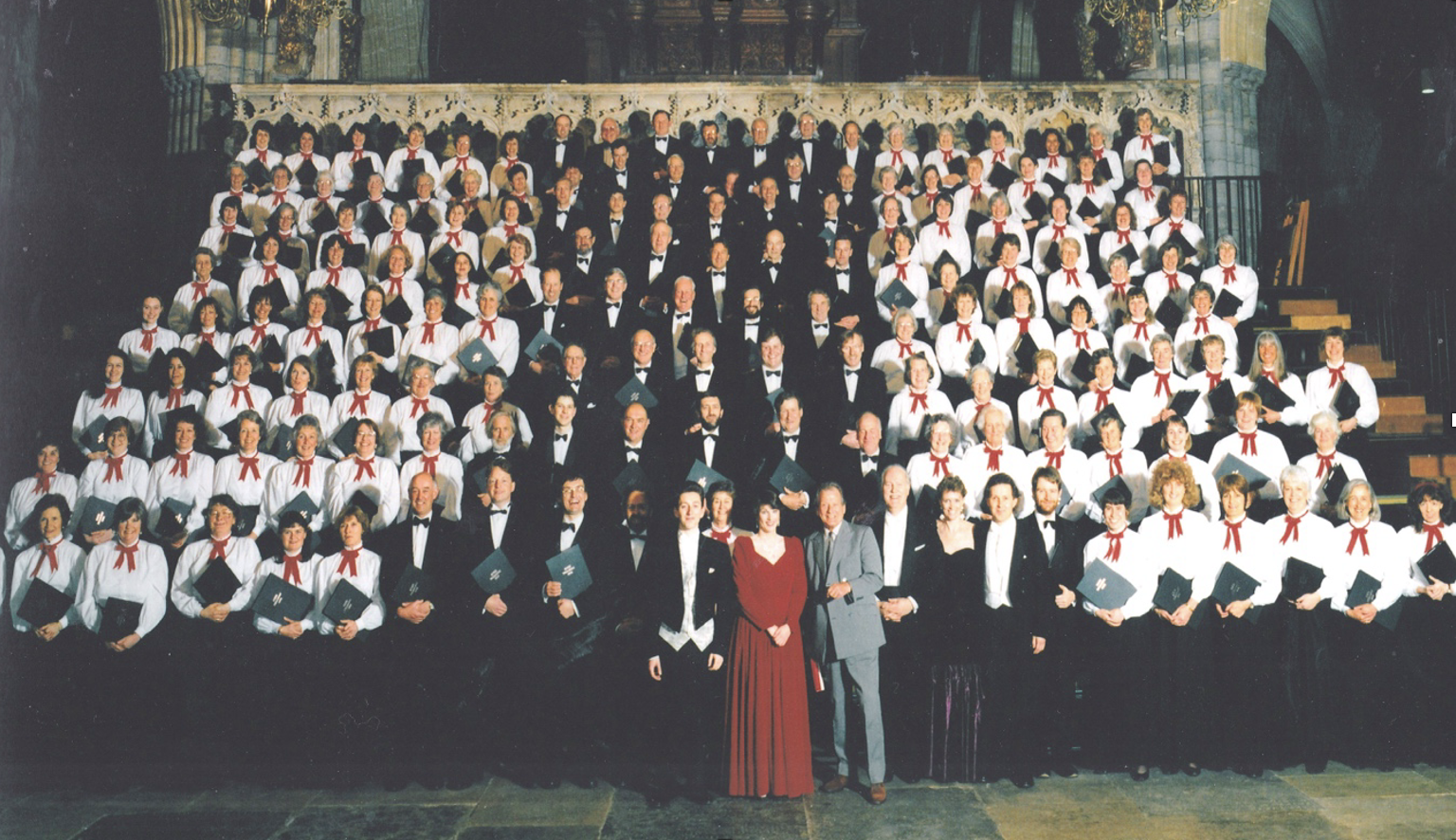
Raymond Calcraft, one of our honorary vice presidents and our Director of Music from 1988 – 2003, writes a timely article about Sir Neville Marriner and his close links to EPC. Timely, for two reasons: to remind us all of Sir Neville’s links with the choir and to presage the launch of our history section which tenor, Stuart Mole, has compiled after lengthy research. Watch this space.
Sir Neville Marriner(1924 – 2016)
When it was discovered, during the 1980s, that the Choir’s origins dated not from 1930, as had previously been thought, but from as far back as 1846, several important decisions were made by the then Committee. In anticipation of the forthcoming 150th anniversary year, 1995-1996, it was agreed that the Choir’s name should change from ‘Exeter Musical Society’ to ’Exeter Philharmonic Choir’. And given what was now known to be its historical importance, it seemed entirely appropriate to invite the (Lord) Mayor of Exeter to be the Philharmonic’s Honorary President. When it came to the decision to ask a significant figure in this country’s musical life to be EPC’s first Honorary Patron, the Committee agreed that Sir Neville Marriner should be approached. Having heard the Choir sing in the film Shadows and Light: Joaquín Rodrigo at 90, in which he himself had played an important role, Sir Neville accepted.
The first concert he and his wife Lady Molly attended was the second of the two 150th Anniversary performances of Messiah, given in the Cathedral on the 25th April 1996. At the end of the concert he said to the Choir: “On my way here, I wasn’t really sure that I wanted to hear yet another performance of Messiah… but you were sensational!” The generosity of that remark was typical of Sir Neville, as countless musicians and friends have testified. He attended the Choir’s Beethoven performance in 2000, and also came to the rehearsal for our Royal Philharmonic Orchestra concert in the same year, making kind and appreciative comments on both occasions. And when on its release I sent him a copy of our EMI Classics recording of Cántico, which the Choir had made with the RPO, he telephoned me immediately, to congratulate us. In 2016 Elizabeth Matthews and I produced a volume of translations of Rodrigo’s writings on music, and Sir Neville readily agreed to write a Foreword to it. It was both generous and eloquent, and ended : ‘From playing his music I believe I understand Rodrigo the composer; now I feel I know Rodrigo the man.’ A friend commented that Elizabeth and I had no doubt written the Foreword ourselves, and had simply asked Sir Neville to sign it. But the words were of course entirely his own.
The Academy of St Martin in the Fields, which he created, was only one of the many orchestras worldwide with which Sir Neville worked, although the hundreds of recordings he made with the Academy remain a unique achievement. When the film Amadeus was made, for which the Academy provided the soundtrack, the publicity for the film showed a picture of Mozart beside a photo of Sir Neville, with the caption: ‘Only two people were qualified to conduct the score of Amadeus… One was unavailable.’ The humour of that no doubt amused the conductor, though the obvious flattery would have rather disconcerted him. Good humour (he said that his epitaph should be ‘Follow the beat!’), encouragement, generosity, and kindness were some of the most obvious features of Sir Neville’s character, though it is his legacy as an outstanding conductor which the world of music will always treasure. It is surely a source of pride for the members of Exeter Philharmonic Choir that their first Honorary Patron was one of the greatest musicians that this country has ever produced.
- AN EVENING OF HIGH DRAMA AND THRILLS – VERDI REQUIEM
-
Date Posted: Wed, 20 Mar 2024
 EXETER CATHEDRAL, 16 MARCH 2024
With Verdi's Requiem, the Exeter Philharmonic Choir, directed by Howard Ionascu, brought one of music’s greatest choral works to Exeter Cathedral on 16 March. The Requiem, of course, demands large-scale forces for maximum effect, duly provided by a choir of 117 singers (or so I counted in the programme) and the luxury of the Bournemouth Symphony Orchestra fresh from its own performance of the work in Poole a fortnight or so previously. With a well-matched quartet of soloists – Judith Howarth (soprano), Marta Fontanals-Simmons (mezzo-soprano), Oliver Johnston (tenor) and Ossian Huskinson (bass) – and a sold-out Cathedral, the stage was set for a dramatic evening.
Verdi brought a sense of operatic theatricality to his setting of the Mass, with grandeur and drama in equal measure; and excitement was a-plenty as the evening unfolded. The opening movement, Requiem and Kyrie, introduced us early to the excellence of the performers – soloists, choir and orchestra alike. Then the Dies irae’s picture of the day of wrath came over thrillingly, with the choir’s energetic singing spurred on by a fine bass drum and superb orchestral brass, the latter then moving to even greater volume in the ‘Tuba mirum’, which the valiant choir found it a challenge to match!
The tension did not slacken with Ossian Huskinson’s authoritative delivery of ‘Mors stupebit.’ I liked the vocal shading he brought to his role in the Requiem, both here and in the later ‘Confutatis maledictis.’ Soloists and choir combined effectively in the dramatic contrasts of the ‘Rex tremendae’, while immediately after the interval the choir brought an attractive lilt to its performance of the fourth movement, Sanctus.
But the Requiem is not all blood and thunder; Verdi brought to it much beauty and lyricism. The soloists were the main protagonists in presenting this side of the work, singing expressively as a genuine partnership, for instance, in movement 3, Offertory, at the end of which the Bournemouth strings played the orchestral postlude most beautifully. The orchestra also provided sensitive support to the three lower soloists’ moving performance of movement 6, Lux aeterna, introduced by Marta Fontanals-Simmons' lovely singing, which we had also heard earlier in the ‘Liber scriptus’ and, with soprano Judith Howarth, ‘Recordare’ sections of the Dies irae. When accompanying these more meditative elements of the work, Howard Ionascu ensured that the choir gave careful and effective attention to internal balance and dynamics.
All the different emotions of the Requiem were tied together in the concluding Libera me, where Judith Howarth brought her years of experience and dramatic awareness to a taxing part that takes the soprano soloist up to a high B flat marked ‘pppp’ and, later, the C above, against the fortissimos of choir and orchestra. Here, in the reprise of the Dies irae and in the fugue of the Libera me, as indeed elsewhere during the evening, the EPC singers were in fine voice, with director Howard Ionascu bringing out the best of them. And what a privilege to be accompanied in a major choral work by such a secure and responsive orchestra as the BSO!
The performance rightly attracted much acclaim from the capacity audience. For both them and the performers it was a memorable evening. It was fitting that the occasion was the EPC’s annual Lord Mayor’s Concert, with a retiring collection to benefit the Lord Mayor’s chosen charity, FORCE.
David Batty
- Refugee Support Devon ‘overwhelmed’ by support at Carol concerts
-
Date Posted: Mon, 8 Jan 2024
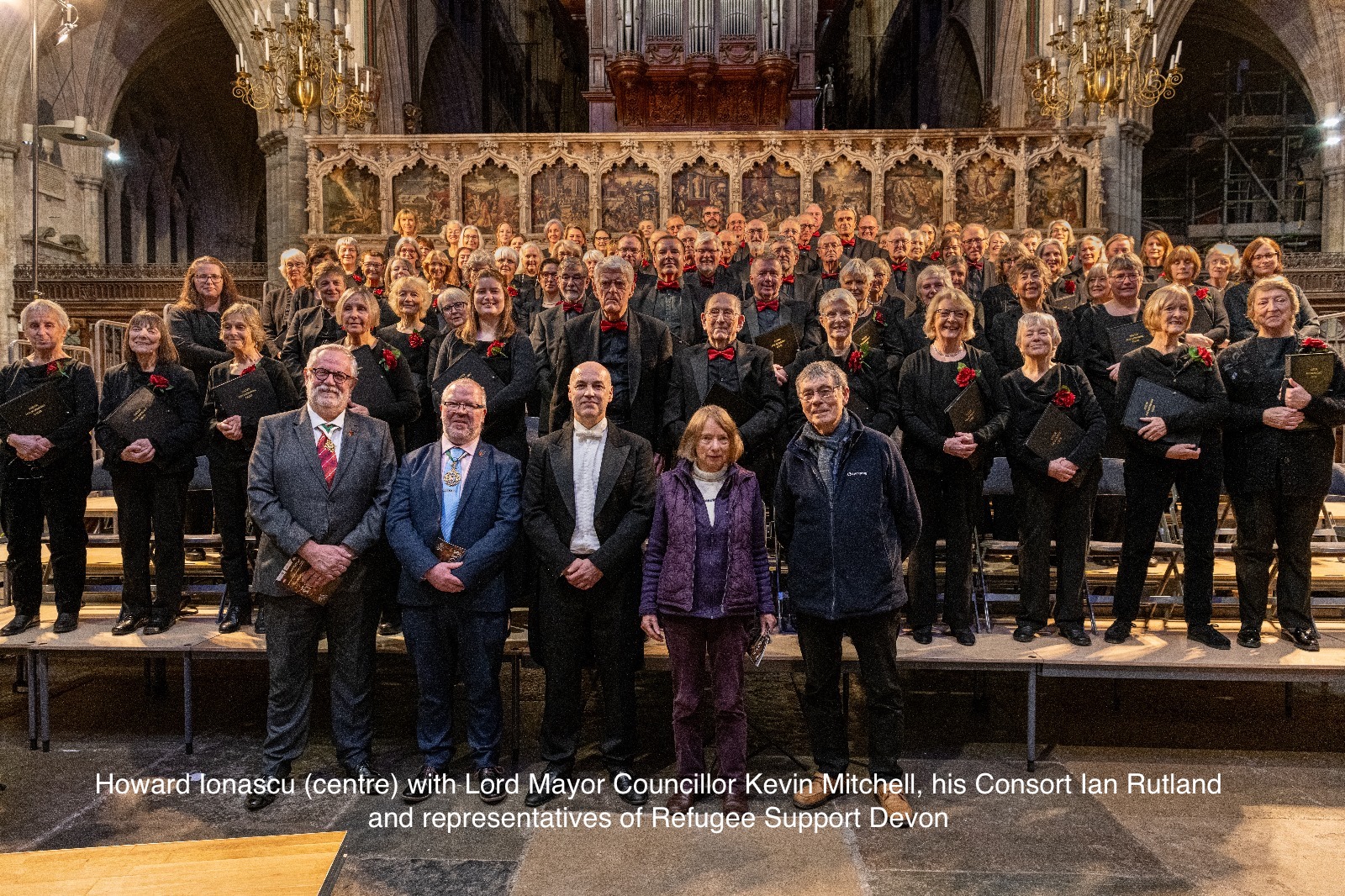
Our Carols in the Cathedral concerts on 13 and 14 December 2023 produced two happy evenings of Christmas music and continued our proud tradition of raising funds for local charities.
This year the concerts raised £3,634.29 for Refugee Support Devon, who were overwhelmed by the generosity of our audiences and deeply grateful for being chosen as our charity. They never imagined raising such a large sum, which will have a significant impact on their work.
In a packed Cathedral, under the baton of director of music Howard Ionascu, the choir performed an exciting and varied programme, including a new carol, Nova! Nova! by associate director of music Stephen Tanner. The audiences each night joined in heartily with well-known favourites, while guest artist Julian Poore on trumpet and Stephen Tanner on organ and piano thrilled everyone with their virtuoso playing. The programme was introduced by Elizabeth-Jane Baldry with fascinating information about each carol.
Response from the audiences was very enthusiastic, one member even describing the concert as the ‘best performance’ she had heard from EPC, with ‘a lovely balance of old favourites and new music’.
- ‘CAROLS IN THE CATHEDRAL’ WILL HELP LOCAL REFUGEE CHARITY
-
Date Posted: Mon, 4 Dec 2023

Exeter Philharmonic Choir is proud to have raised funds for many local charities at its annual carol concerts in Exeter Cathedral. This year the donations received will go to Refugee Support Devon. The charity’s vision is for Devon to be a place where refugees are welcomed and supported to rebuild their lives and integrate successfully into their new communities. With the help of the cash collection, it will be able to provide welcome packs for newly arrived asylum seekers in Devon.
The exciting programme of music for our ‘Carols in the Cathedral’ on 12 and 13 December 2023 will include familiar tunes alongside new settings of traditional carols. Guest artist will be Julian Poore on trumpet, with the choir’s associate director of music, Stephen Tanner, on organ and piano. The choir is particularly looking forward to performing a new carol Stephen has written for us, called Nova! Nova!
As always, the audience will be encouraged to raise the Cathedral’s resplendent roof by joining the choir to sing some well-known Christmas carols.
- An Exhilarating Evening of Music, 4 November 2023, Exeter Cathedral – Music of the Baroque
-
Date Posted: Tue, 7 Nov 2023
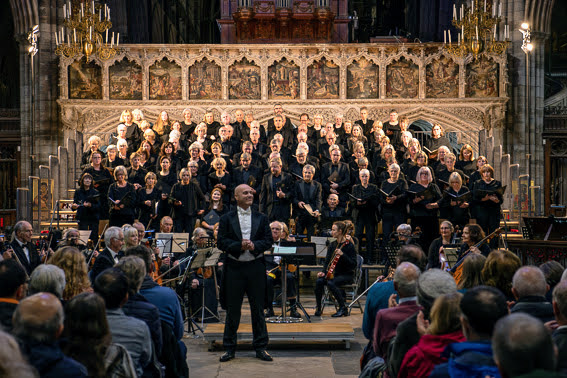
It was exciting to have Exeter Cathedral full to capacity to hear the glorious music of Handel, Marcello and Vivaldi for our first concert of the 2023/24 season.
Handel Zadok the Priest provided an uplifting start to the concert. Under the direction of Howard Ionascu, the choir fully captured the grandeur and majesty of the work.
The more intimate music of Marcello Oboe Concerto in D minor provided a beautiful contrast. Fergus McCready, accompanied by the Isca Ensemble, produced a beautiful tone, long florid lines and effortless ornamentation, much to the delight of the audience.
The choir then gave a focused and vibrant performance of Vivaldi Gloria, creating moments of great contrast.
The final item of the programme was Handel Dixit Dominus, a piece full of choral challenges — intricate counterpoint, repeated high notes and glorious suspensions — which the choir more than met, with confident entries, a well-blended choral sound and clear communication with the audience.
The three gifted soloists — Lucy Cronin, Ellie Sperling and Martha McLorinan — all produced a wonderful purity of tone, coupled with vocal dexterity, and filled the Cathedral with their voices. We are proud that two singers from the choir, Stuart Mole (tenor) and Peter Francis (bass), joined them for one movement. Sensitive basso continuo accompaniment was provided throughout on the organ by the choir’s associate director of music, Stephen Tanner, and by Tirke Linnemann on cello.
It was the choir’s first collaboration with the Isca Ensemble and we look forward to developing our partnership in the future.
It was an exhilarating evening of music for singers, players and audience.
Angela Blackwell’s full review can be found here: https://www.exeterphilharmonic.org.uk/dbpage.php?pg=pastevents
- THE NEW SEASON STARTS WITH A FLOURISH
-
Date Posted: Fri, 29 Sep 2023
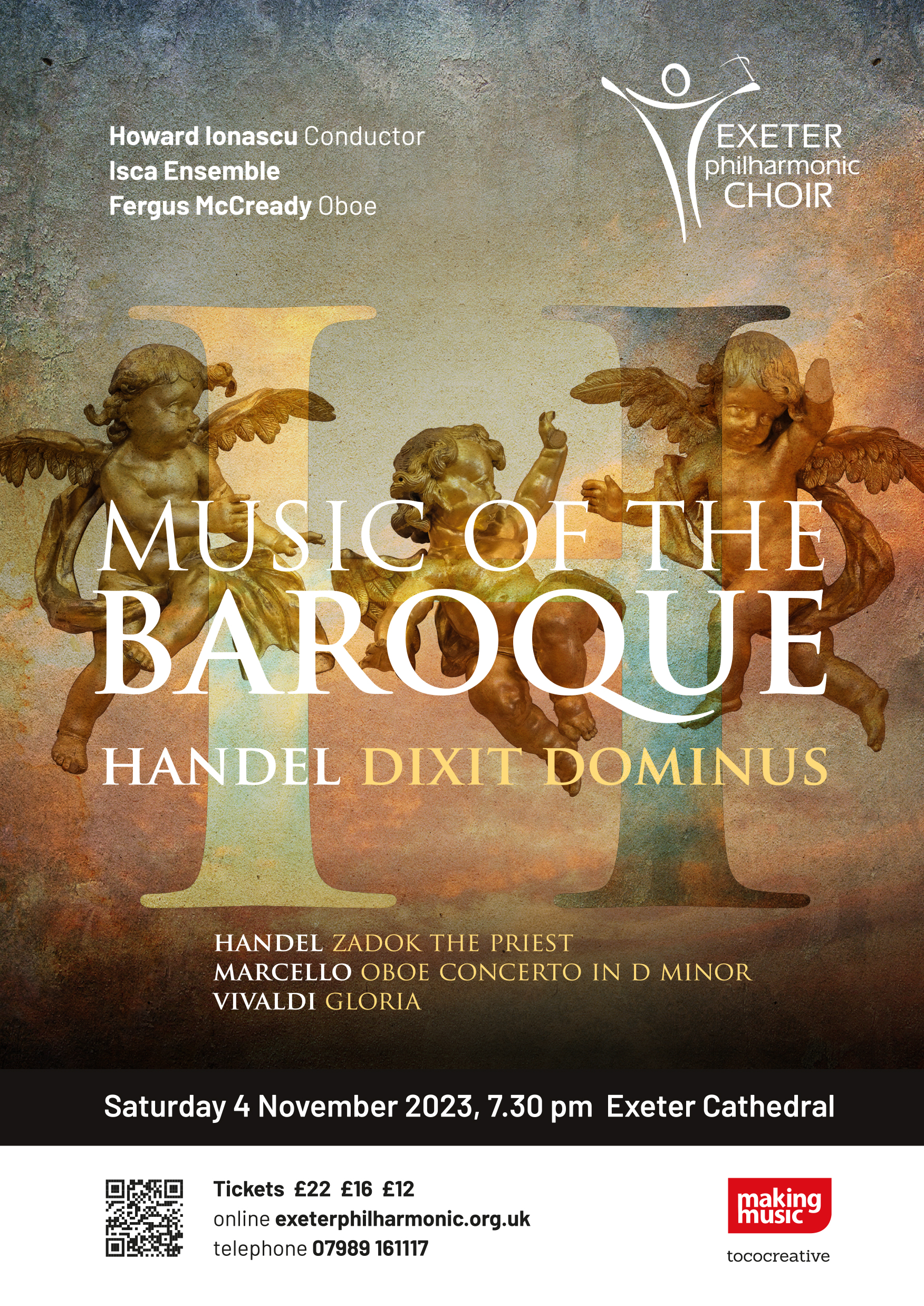
Our new season has started with a flourish as we embark on rehearsing the repertoire for Music of the Baroque in Exeter Cathedral, 7.30 pm, 4 November 2023. The concert features glorious Baroque music: Dixit Dominus and Zadok the Priest by Handel; Oboe Concerto in D minor by 18th-century Venetian composer Marcello; and Vivaldi’s ever-popular Gloria.
For Howard Ionascu, our Director of Music, ‘Dixit Dominus sits alongside Messiah as one of Handel’s sublime choral works.’ The intricacies of the work are certainly keeping the choir on its toes.
Joining us will be well-known local orchestra, the Isca Ensemble, together with rising young oboe player Fergus McCready and internationally renowned vocal soloists Lucy Cronin, Ellie Sperling and Martha McLorinan.
Two of the soloists have Exeter connections. Oboist Fergus McCready took up the instrument after playing his recorder at a voice trial in Exeter Cathedral to Stephen Tanner, director of girl choristers there for many years. Soprano soloist Ellie Sperling (née Partridge) was a chorister under Stephen at Exeter Cathedral and then began developing her singing career in his choral group, Isca Voices. Stephen is now the choir’s Associate Director of Music and will also play the continuo parts in the concert.
We are looking forward to working with the Isca Ensemble. Its Musical Director Roger Hendy says: ‘We are delighted to have this opportunity of teaming up with Exeter Philharmonic Choir to present what promises to be a very special autumn programme of beautiful Baroque music.’
- FORMER EPC DIRECTOR OF MUSIC FEATURES ON CENTENARY TRIBUTE CD
-
Date Posted: Wed, 27 Sep 2023
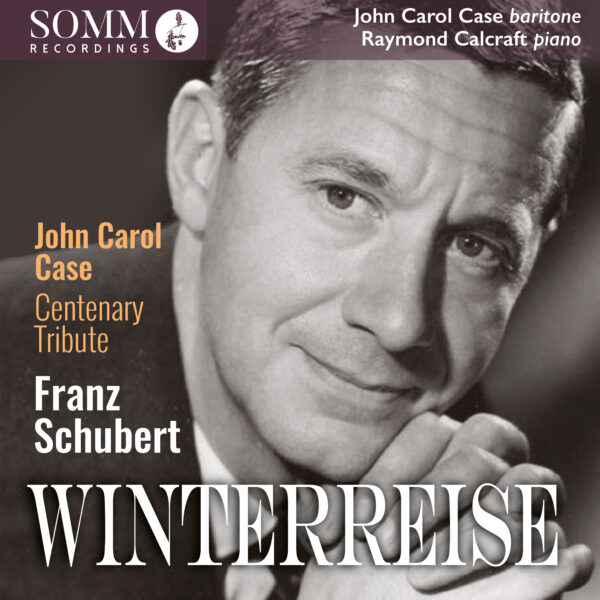
Raymond Calcraft, Exeter Philharmonic Choir’s former Director of Music, features on a recently released CD of Schubert’s famous song-cycle, Winterreise. The recording is a tribute from SOMM Recordings to mark the centenary of the birth of distinguished English baritone, John Carol Case.
John and Raymond first met in 1971 and subsequently gave several concerts and recitals together, including Handel’s Messiah, the Requiems of Brahms and Fauré, and Vaughan Williams’ Dona Nobis Pacem, the latter receiving its first performance in Germany. Their performance of Schubert’s Winterreise was given at the Portsmouth Festival in May 1973.
Raymond Calcraft was John Case’s accompanist of choice during the last five years of his career before his retirement in 1976. Raymond has fond memories of their relationship, describing John Carol Case’s singing as being “notable for an almost tenor-like quality in its upper register, his remarkable breath control and, above all, for the clarity and eloquence of his diction.”
Go to https://somm-recordings.com/recording/john-carol-case-centenary-tribute-winterreise/ for your chosen format of the recording.
- A Glorious Finale to our Season
-
Date Posted: Sun, 21 May 2023
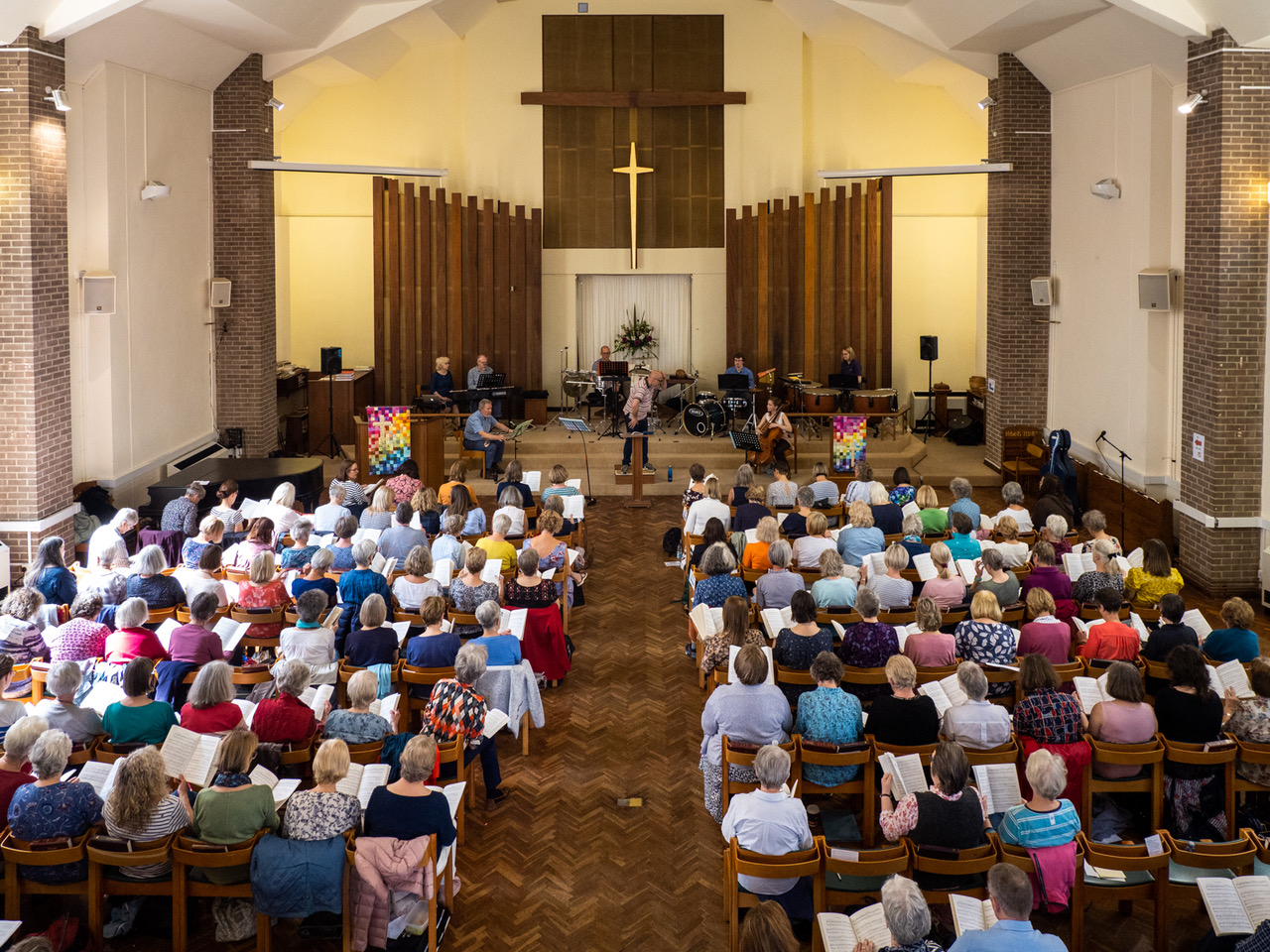 Our singing year ended on 13 May 2023 with a hugely successful workshop on Karl Jenkins’ The Armed Man. Nearly 200 singers gathered in The Mint Methodist Church Centre for a glorious day of singing.
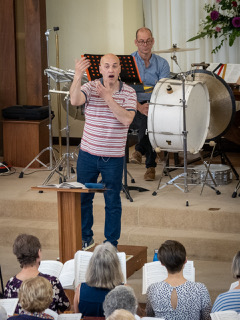
Our director of music, Howard Ionascu, led with his usual enthusiasm and skill. Stephen Tanner, our associate director of music, worked magic with both keyboard and computer, producing some amazingly authentic instrumental sounds. Our guest musicians, trumpeter Paul Thomas, cellist Amye Farrell and percussionists Michelle Hiley, Andy Turner and Tom Clemo, were outstanding. Having a live band greatly enhanced our music-making, while the solo contributions of choir members Helen Goode, Pip Gascoigne-Pees, Jacquie Barnes, Tony Smale and Anthony Butler added many poignant touches.
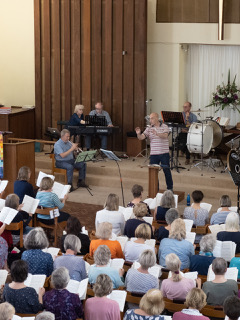
The day ended with a spirited performance of the work to an audience of family and friends, who gave all the performers a standing ovation. Several guests commented on how much they had learned by spending the day singing next to some of our members. Others spoke movingly of the relevance of the work, summed up in Jenkins’ sub-title, A Mass for Peace, to the current war in Ukraine.
A great team from the choir provided refreshments with delicious home-made cakes and bakes. A big thank you to all choir members who made the day run so smoothly.
- CHORAL WORKSHOP – KARL JENKINS The Armed Man: A MASS FOR PEACE
-
Date Posted: Wed, 29 Mar 2023
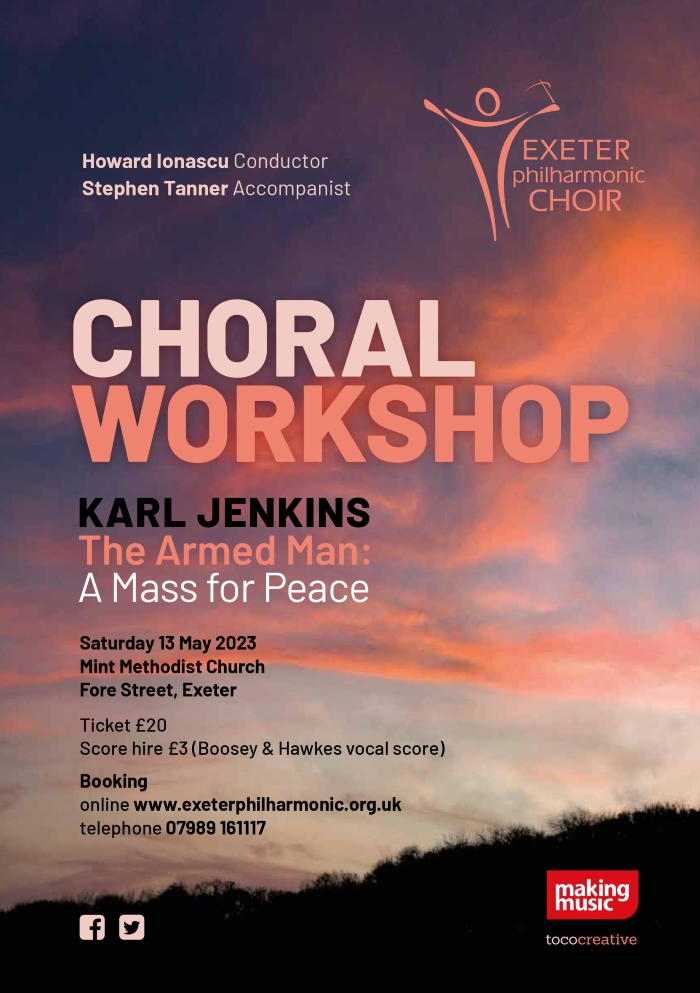
Exeter Philharmonic Choir
CHORAL WORKSHOP
KARL JENKINS
The Armed Man: A Mass for Peace
Saturday 13 May 2023
9.30 am–5.30 pm
Mint Methodist Church
Fore Street, Exeter EX4 3AT
Our season this year ends with a choral workshop exploring Karl Jenkins’ The Armed Man: A Mass for Peace, a choral classic which fuses words and music from many different centuries and cultures.
Led by our Director of Music, Howard Ionascu, with accompaniment by Associate Director of Music, Stephen Tanner, singers will explore different sections of this dramatic work as well as gaining tips on vocal technique. The day will conclude with an informal performance accompanied by a small instrumental ensemble and with soloists from Exeter Philharmonic Choir.
We look forward to welcoming singers from Devon and beyond. Members of EPC will have rehearsed the work and so will be able to support singers who are unfamiliar with the music.
Ticket £20; score hire £3 (Boosey & Hawkes vocal score)
online www.exeterphilharmonic.org.uk
telephone 07989 161117
- Audience enthralled by Monteverdi’s magnificent Vespers
-
Date Posted: Wed, 22 Mar 2023
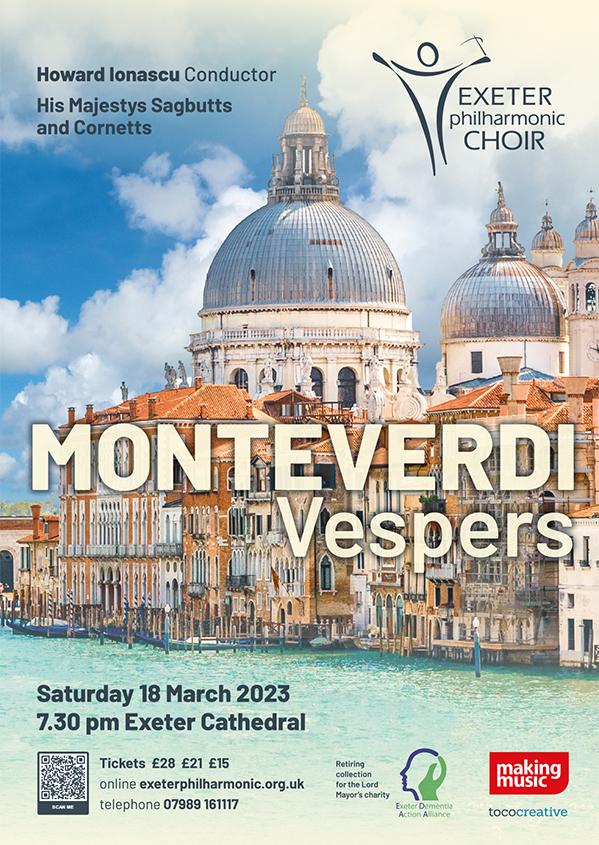
Monteverdi Vespers, 18 March 2023, Exeter Cathedral
The splendour of Exeter Cathedral formed the perfect backdrop for the performance of Monteverdi’s 400-year-old work by Exeter Philharmonic Choir, supported by Devon County Junior Choir, His Majestys Sagbutts & Cornetts, six world-class vocal soloists and associate director of music, Stephen Tanner, on chamber organ.
The staging of the event by EPC’s director of music, Howard Ionascu, took full advantage of the building’s acoustics, with performers moving to different places to create varied dramatic effects, which were much appreciated by the capacity audience. There was particular praise for the children of the Devon County Junior Choir, who sang beautifully and with great confidence.
As our reviewer, Angela Blackwell, says: “The opportunity to hear Monteverdi’s rarely performed, towering choral work was clearly a big draw and it was wonderful to see a full Cathedral. The audience was amply rewarded with an evening of music-making that had moments of both intimacy and vocal fireworks.”
She continues: “This was an incredibly ambitious concert and it was a delight to sit in the Cathedral, enveloped by sound, and to reflect on this music that would have been heard there so many centuries ago. Congratulations to everyone on producing an evening of music ranging from the devout to magnificent splendour!”
There has also been an enthusiastic response on social media. One audience member described it as “the best concert I have been to at the Cathedral in 24 years”. Others commented on the beauty of the occasion and how all the performers looked happy and relaxed, while everyone appreciated the singing of the Devon County Junior Choir under Andrew Downton’s direction.
You can read Angela Backwell’s full review here: https://www.exeterphilharmonic.org.uk/dbpage.php?pg=pastevents
- Glorious Carols in the Cathedral benefit local charity
-
Date Posted: Mon, 19 Dec 2022

Exeter Philharmonic Choir once again brought the joy of Christmas music to Exeter Cathedral with two nights of carols in December, under the baton of our director of music, Howard Ionascu. The audiences clearly had a wonderful time, raising their voices with us in the congregational carols and responding with enthusiastic applause to our performances. One audience member described it as a magical evening, while another said their New Year’s resolution would be to come and hear the choir perform more often.
Special guest was internationally renowned soprano Amy Carson, whose glorious voice added an extra dimension to the concerts with her beautiful renditions of pieces by Handel and Bach and the much-loved favourite, O Holy Night, sung in French and English. Stephen Tanner, our associate director of music, complemented the singing with virtuoso playing on the Cathedral organ. The biggest hit was his enchanting arrangement of Stille Nacht for soprano, choir and organ.
Once again we continued our proud tradition of raising funds at Christmas for a local charity. This year’s chosen charity was Exeter-based Dream-A-Way, which helps holiday dreams come true for Devon children and adults with disabilities or life-affecting health conditions. The charity was overwhelmed by the audience’s generosity on both nights, which raised a total of £2,913.
Exeter Philharmonic Choir is very grateful to our sponsors, Everys Solicitors and Clinton Devon Estates, for their continued support of our carol concerts over many years.
- CHOIR AND BRASS CELEBRATE ON BONFIRE NIGHT
-
Date Posted: Wed, 23 Nov 2022
1.jpg "CHOIR AND BRASS CELEBRATE ON BONFIRE NIGHT")
We opened our 176th season with Gloria, a concert planned to celebrate Queen Elizabeth II’s Platinum Jubilee. Instead our concert was a thanksgiving for her long and glorious reign. And in the words of our reviewer, David Batty, the audience “was richly entertained by an evening of music which was certainly fit to celebrate Queen Elizabeth's long life and reign.”
The concert, under the baton of our director of music Howard Ionascu featured the augmented Onyx Brass with percussion, and Stephen Tanner, our associate director of music, on the Cathedral organ. Members of the choir sang the solos.
Highlights for David Batty included the choir’s performance of Stanford’s For Lo, I Raise Up. “With admirable diction, the performance reflected well the anthem's initial anger before moving to the prophet's concluding conciliatory message about deliverance.”
“The concert concluded with choir and brass combining for its principal work, John Rutter's popular Gloria, composed in 1974.The introspective second movement was impressive in expression and tuning, with Rutter's ethereal effects allowed real sensitivity in the performance, led by the organ (expertly played by Stephen Tanner, as elsewhere during the concert), and building around the words 'Domine Deus' to a beautifully graded climax in the middle of the movement. Appreciation should be recorded of those members of the EPC who sang short solos both here and in the Stanford anthem. Choir, brass, percussion and organ sounded resplendent in the energetic first and third movements, in particular in their accommodating the fast tempo set for the latter, with the concert finishing with a real sparkle – all the more appropriate for Bonfire Night!”
You can read David Batty’s full review here: www.exeterphilharmonic.org.uk/dbpage.php?pg=pastevents
- A Fine Finale for the 2022 Pilgrims' Chorus
-
Date Posted: Fri, 12 Aug 2022
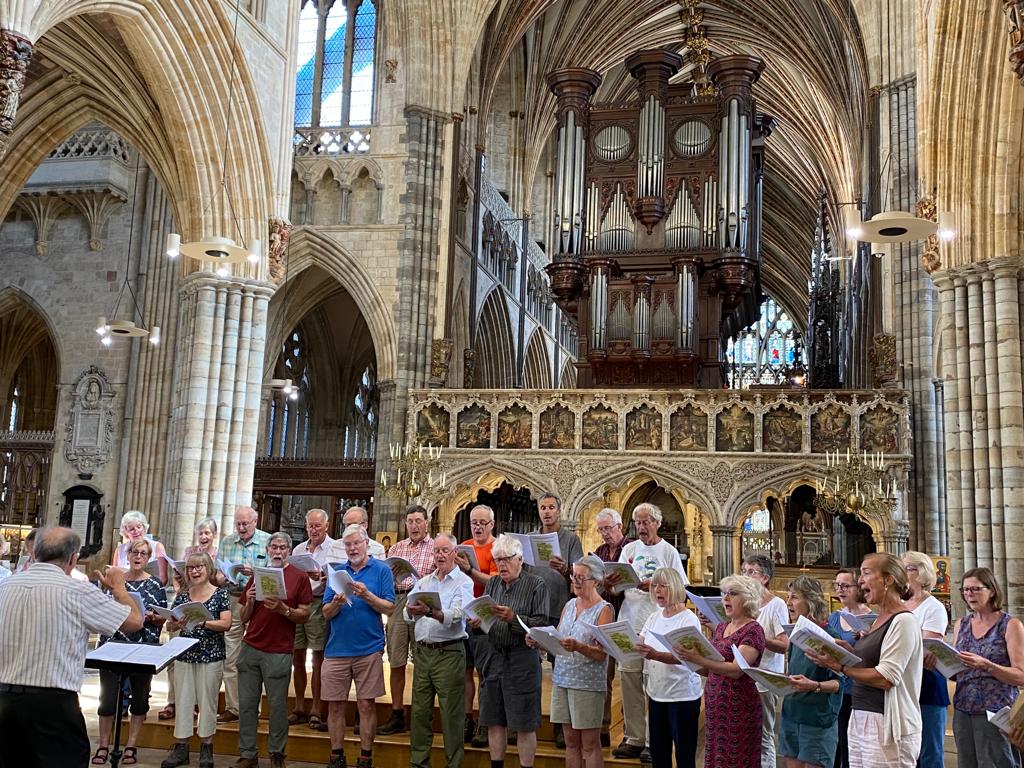
Members of EPC and friends completed their second choral pilgrimage, this year along St Boniface Way, on Sunday 7 August with their final concert in Exeter Cathedral where they had a warm reception from an appreciative audience.
Their journey started on Friday 5 August at the Holy Cross Church, Crediton where they performed their first concert. Early on Saturday 6, the pilgrims sang a few pieces in St Swithun's Church, Shobrooke – and then continued on their way with a beautfiul walk to Newton St Cyres for a lunchtime concert in the Church of St Cyr and St Julitta. The day finished with a performance in the Church of Our Lady in Upton Pyne and a delicious meal in the village hall.
Before their final concert in the cathedral, the pilgrims walked from Upton Pyne, climbing up through Stoke Woods to the Mary Harris Memorial Chapel on the university campus to sing a short programme in the chapel's amazing acoustic.
The pilgrims received wonderful hospitality along their way from the churches and their communities which hosted their concerts.
The Programme
Under the direction of EPC's associate director of music, Stephen Tanner, the Pilgrims' Chorus sang an eclectic programme of music interspersed with poetry readings. This year there was music by Byrd, Scarlatti, Bruckner and Elgar along with folk songs set by Holst and Vaughan-Williams and a set of spirituals arranged by Stephen. And a special feature was a performance of Give me my scallop shell by Andrew Millington – a beautfiul interpretation of Sir Walter Raleigh's words in The Passionalte Man's Pilgrimage.
Plans are already underway for a third choral pilgrimage in 2023, this time in Heredforshire.
- A CHORAL PILGRIMAGE: IN THE STEPS OF St BONIFACE
-
Date Posted: Thu, 30 Jun 2022
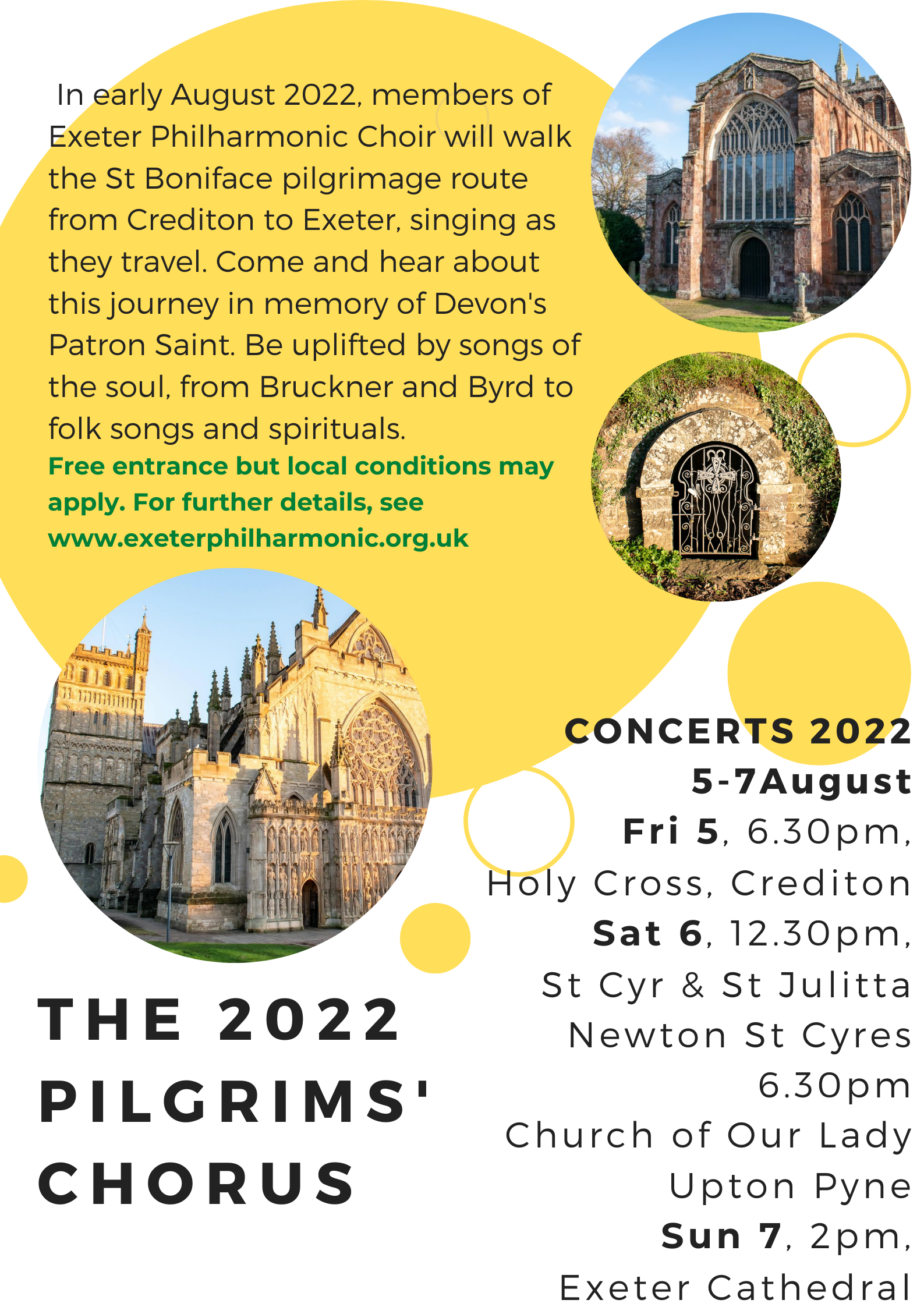
Members of Exeter Philharmonic are about to start rehearsing for our second Choral Pilgrimage, this year along St Boniface Way from Holy Cross Church, Crediton to Exeter Cathedral.
St Boniface Way is a new walking route which tells an old Devon story commemorating an Anglo-Saxon boy, Boniface (now the patron saint of Devon) who was born in Crediton in 675 and who travelled to a monastery in Exeter to begin his religious training.
The singers will follow the route which runs the fourteen miles from Crediton along the rivers, fields and churches of the Creedy and Exe valleys before ending at Exeter Cathedral – singing as they go.
The Pilgrims’ Chorus is again under the direction of Stephen Tanner, our Associate Director of Music, leading an eclectic programme featuring classical composers from Byrd to Bruckner, Scarlatti to Stanford alongside madrigals, folk songs and three traditional spirituals arranged by Stephen Tanner. There will be a strong West Country flavour, including Andrew Millington’s Give me my scallop shell.
Do come and hear these ‘songs of the soul’ and meet our travelling singers. Entrance to each of the concerts is free, though donations are invited.
THE PILGRIMS’ CHORUS – CONCERTS 2022Friday 5 August, 6.30 pm. Church of the Holy Cross, Crediton.
Saturday 6 August, 12.30 pm. Church of St Cyr and St Julitta, Newton St Cyr
Saturday 6 August, 6.30.Church of Our Lady, Upton Pyne.
While admission to the Upton Pyne concert is free, with donations welcome, seating is restricted and seats will need to be reserved in advance by contacting Linda Findlay, on lindafindlay99@yahoo.co.uk, or tel.01392-841402.
Sunday 7 August, 2.00 pm. Exeter Cathedral (normal entrance fee applies)
Free entrance to all concerts – donations invited.
- Ending the Season with a Swing
-
Date Posted: Sat, 28 May 2022
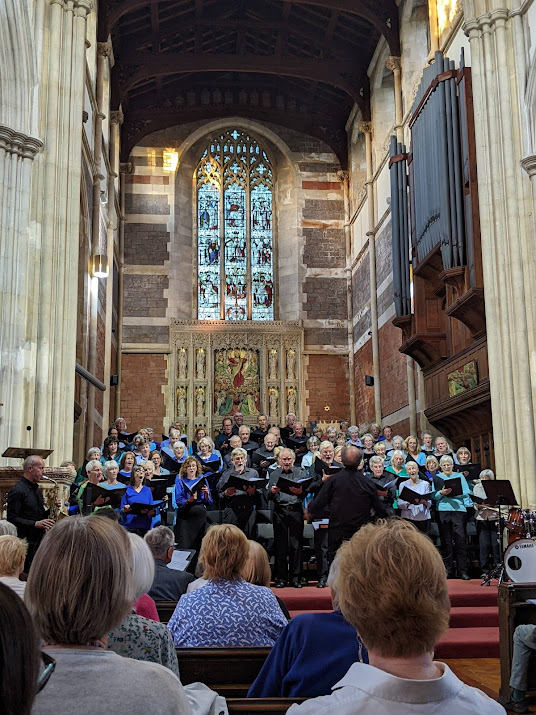
Stunning, happy, memorable are just some of words used to describe our final concert of the season at Holy Trinity Church, Exmouth. And this review by David Batty says it all:
Enthusiasm, Accuracy, Smiling Faces … and Swing!
When did you last see a large choral society obviously enjoying themselves during a performance? I don't just mean after the event when the singers are enthusing about an evening's music making, but actually during a concert, with smiles and joy on their faces. Well, this was certainly the case at the Exeter Philharmonic Choir's summer concert on Saturday 21 May at Holy Trinity Church, Exmouth, and none more so than during the first performance of Stephen Tanner's Jazz Te Deum and Jubilate Deo.
The concert, conducted by Stephen Tanner, the Choir's Associate Director of Music, focused on the theme of Sacred Jazz, a concept carefully explained in Tanner's programme notes for the occasion. His new work fused two familiar sacred texts with music in the jazz idiom composed during the coronavirus pandemic lockdown. The Choir brought an infectious swing to the piece enhanced by the combination of saxophone, piano, double bass and drums that provided the instrumental accompaniment. The beautiful and atmospheric playing of saxophonist Steve Wiltshire was especially effective in sustaining the special jazz idiom that underpinned Tanner's ambitions, but Andrew Downton (piano), Phil Williams (bass) and Ryan Carter (drums) all had their part to play in a successful first performance, which was met with warm and prolonged applause from the large audience. The work deserves a second outing, and more!
Earlier in the concert, Stephen Tanner conducted the Choir in three traditional spirituals in his own, effective arrangements (I especially enjoyed Didn't my Lord deliver Daniel?), while he then joined Andrew Downton in a performance of Richard Rodney Bennett's Four Piece Suite: Divertimento for Two Pianos, a lively composition touching on samba, country blues and ragtime, perhaps not helped on this occasion by the heavy bass of the two electric pianos. The concert had opened with music by Will Todd, a composer who has made a prominent name for himself in a wide range of musical styles including his jazz-based Mass in Blue. On this occasion we heard another jazz-infused work, four of the six songs that make up Todd's Songs of Peace, quieter in mood than the Tanner work, but well performed by the ever-attentive Choir and the accompaniment of piano, bass and drums.
The concert's repertoire could have presented a real challenge for the EPC singers as they moved outside their usual comfort zone of choral classics, but they met the challenge with lots of enthusiasm, accuracy, smiling faces … and swing!
David Batty
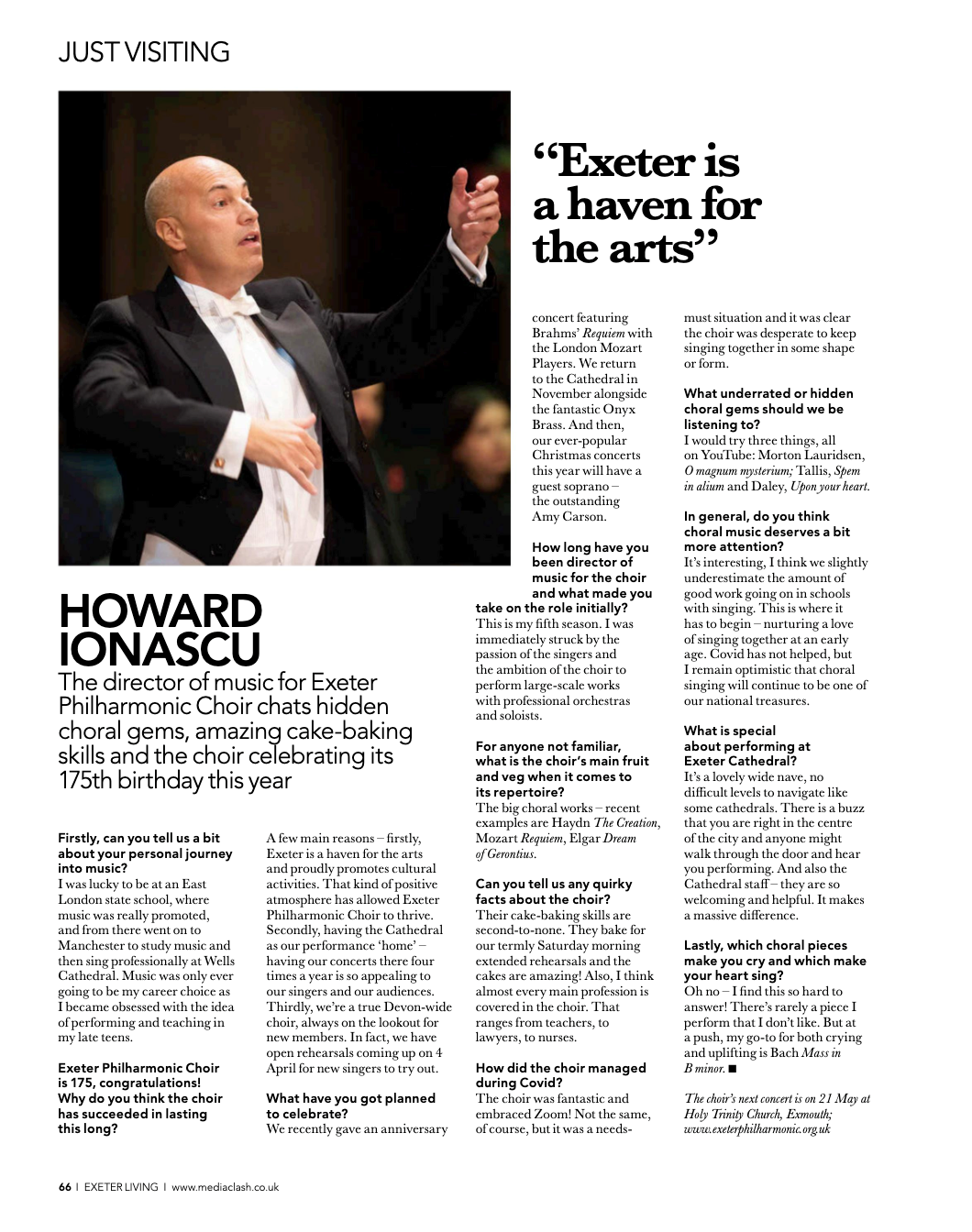
- Celebrating 175 years: Exeter Living interviews our Director of Music, Howard Ionascu
-
Date Posted: Tue, 5 Apr 2022
- Celebrating 175 Years of Performance with Brahms Ein deutsches Requiem
-
Date Posted: Wed, 16 Mar 2022
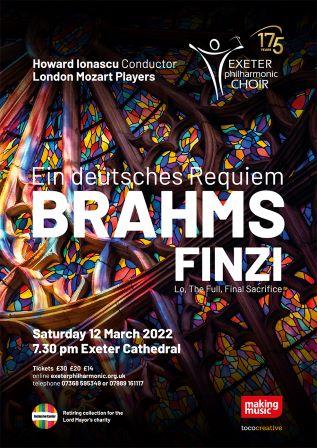
Here are extracts from David Batty’s review. You can read the full text here https://www.exeterphilharmonic.org.uk/dbpage.php?pg=pastevents
It was two years almost to the day (14 March 2020, just before the first Covid lockdown) that I last had the pleasure of reviewing a concert in Exeter Cathedral by the Exeter Philharmonic Choir. Then it was a performance of Beethoven's mighty Missa Solemnis; this occasion, on Saturday 12 March 2022, was of the German Requiem by Brahms or, rather, Ein deutsches Requiem, as the choir sang the work in the original German. The choice of this major work within the choral repertoire served as a grand celebration of EPC's 175 uninterrupted years of performance since its foundation in 1846 – quite an achievement, and 20 years before Brahms composed the Requiem! It was pleasing, too, to see a well-filled Cathedral to mark the occasion.
For conductor Howard Ionascu this work presented a real challenge. The choir sings in all seven movements, which represents a demanding stay of stamina throughout the 60+ minutes of the work. But Howard Ionascu and his EPC forces are to be admired for keeping the energy levels so high, with no less vigour in the great fugue of the sixth movement than that which ends the third. Some frailties in choral entries and ensemble notwithstanding, the performance gave the audience a real sense of the mix of anguish and consolation that is such a feature of the work. Diction of the German text was good.
Two fine singers took on the solo roles. Jessica Cale's beautiful soprano voice, easily encompassing the high tessitura of her part, led the consolatory fifth movement in a reflective and moving manner. Singing in the third and sixth movements, baritone Timothy Nelson brought an impressive, lieder-like freshness to his performance, with an authoritative feeling for both text and music.
Accompanying the EPC were the London Mozart Players, who provided warm, high quality support: how good, for instance, to have a rich foundation to the slow tread of 'Denn alles Fleisch es ist wie Gras' (‘For all flesh is grass’) at the start of the second movement.
Lo, The Full, Final Sacrifice
Before the Requiem, the concert offered us a rare performance of Gerald Finzi's Lo, The Full, Final Sacrifice, originally written (in 1946) with organ accompaniment but here heard in an orchestral guise very much in the English pastoral tradition. This is a lovely work set to words by the 17th century Richard Crashaw drawn from writings by St Thomas. I enjoyed the choir's careful attention to the work's dynamics though, as with the Brahms, the balance between voices and orchestra was occasionally challenged in forte climaxes. The performance included short solo contributions from EPC members, tenor Stuart Mole and bass Martin Stubbings.
Howard Ionascu and his performers are to be congratulated on such an enjoyable concert, which was the Exeter Philharmonic Choir's annual performance in aid of the Lord Mayor's Charity, on this occasion Inclusive Exeter.
- Celebrating 175 years
-
Date Posted: Sat, 26 Feb 2022
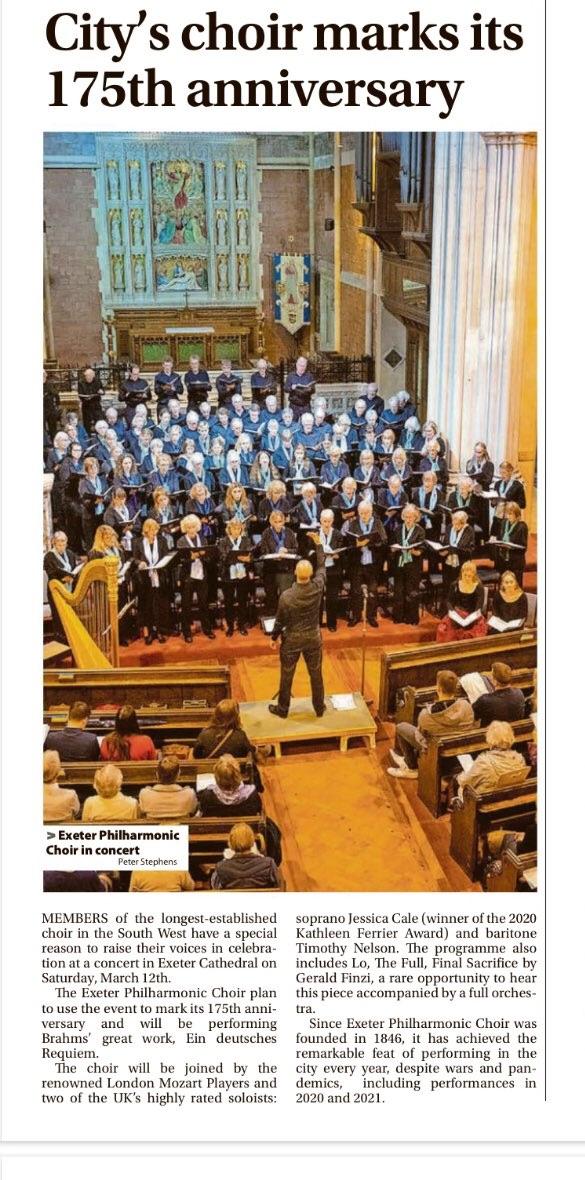
There is a flurry of activity on the publicity front in advance of our 175th anniversary performance of Brahms’ great work, Ein deutsches Requiem in Exeter Cathedral on 12 March. The Western Morning News published an article Friday 26 February. And Angela Kalwaites will feature the choir in her morning programme on BBC Radio Devon, focusing on our celebration of 175 years and our anniversary concert.
Members of the choir are busy publicising the concert among friends, family and work colleagues. And our social media presence on Facebook, Twitter and Instagram is alive with posts.
The choir were delighted at the size of audiences at their Autumn and Christmas concerts and were overwhelmed by the warmth of their reception. We look forward to performing for you again with the renowned London Mozart Players and two of the UK’s most exciting soloists, soprano Jessica Cale, winner of the 2020 Kathleen Ferrier Award, and baritone Timothy Nelson.